

Toll Free:
1-877-270-9985, Phone:
519-653-1301, Fax:
519-653-2253
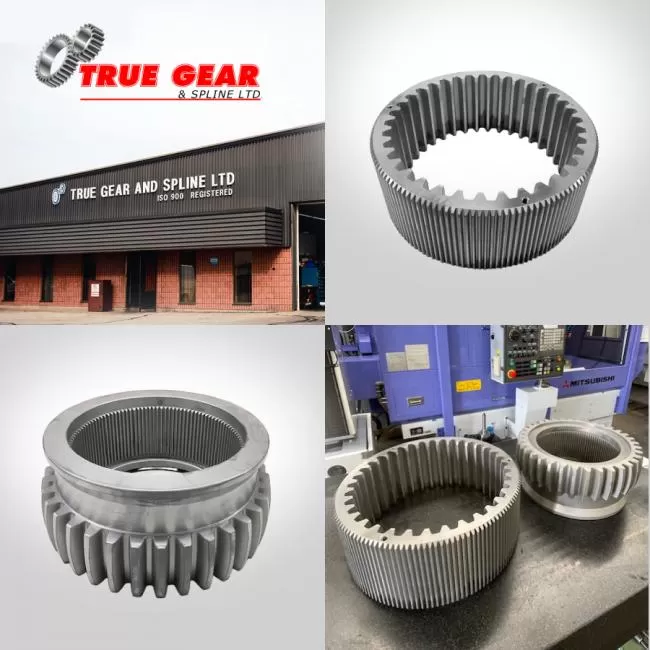
Torque transmission lies at the heart of industrial operations. Now, where there’s torque transmission, there’s also scope for misalignment. This is where couplings come into play. These components are specifically designed to handle misalignment between two rotating shafts.
Gear and sleeve couplings are among the two most sought-after coupling types. In today’s blog, we shed light on the latter and explain which type — flexible or rigid sleeve coupling — will be more appropriate for your transmission system.
Choosing the right sleeve coupling is essential to ensure uninterrupted power transmission. This blog is for those wondering how to make the right coupling selection.
True Gear & Spline Ltd. in Cambridge, Ontario has over 50 years of experience manufacturing the best torque transmission components, including gears, splined shafts, and couplings. Read this blog until the end to learn about rigid vs flexible sleeve couplings, coming from an expert’s point of view.
It is nothing but a hollow cylinder, or a sleeve, designed to connect two coaxial shafts at either end. It firmly holds two parallel shafts with the help of keys and screws. The simple yet effective design makes sleeve couplings easy to manufacture. However, not every manufacturer can offer the same quality. You must avoid sourcing couplings for inexperienced manufacturers.
A coupling must boast excellent strength and durability. At the same time, it must also be customizable. Here are some materials used to make sleeve couplings.
Steel: High-strength, wear resistance, and impressive tensile strength. Performs well under high torque and heavy-load conditions.
Cast iron: Exceptional rigidity and vibration-damping. Ideal for minimal shock load and minimal light-torsion setups due to the brittle nature of cast iron.
Aluminum: Ideal for setups that prioritize weight reduction. Apt for moderate torque transmission in moisture-exposed settings.
Bronze: The low-friction and wear resistance make bronze couplings popular in marine and chemical applications.
Special alloy: Nickel-based and stainless-steel alloy couplings used to deal with heavy-duty misalignments in high-temperature settings.
As the name suggests, this sleeve coupling is rigid and more appropriate for applications where the shafts are perfectly aligned. Rigid sleeve couplings don’t accommodate misalignment and transmit vibration and shock with minimal energy loss. Rigid sleeve couplings are used in precision machine tools, turbines, robotics, automated machinery and CNC machines.
If the goal is to handle misalignment, there is no better option than a flexible sleeve coupling. One of the best features of flexible sleeve coupling is that it permits angular, parallel, and axial movement. Flexible couplings are more commonly used in high-vibration applications such as pumps, compressors, marine propulsions, and fans.
- Measure allowable shaft misalignment.
- Assess torque load requirements.
- Consider vibration or shock load in operation.
- Evaluate maintenance access and downtime cost.
- Match the coupling type with the shaft size and RPM.
Step-by-step decision framework to help you choose the right coupling for your power transmission system. These steps are rather simple but very effective.
Factors such as temperature, moisture, humidity, chemicals, and moisture must be considered. Even factors such as load variation must be considered, as frequent voltage fluctuations cause misalignment. These factors are considered by coupling manufacturers to recommend the right choice.
Torque and RPM are crucial factors that determine the efficiency of power transmission systems. It is important to consider RPM and torque while sourcing gear couplings to avoid premature wear and tear. For example, High-torque applications will benefit from rigid sleeve couplings. Meanwhile, applications with variable torque will benefit from flexible sleeve couplings.
The sleeve coupling material directly influences the load capacity. Choose a material that doesn't buckle under pressure, causing premature wear and tear. For heavy-duty applications, consider steel or cast iron. Bronze and aluminum are ideal for moderate torque applications.
Double-check if the coupling you are sourcing matches the manufacturer’s torque and alignment chart. It is a foolproof way to ensure you are sourcing the right coupling.
More vibration among rotating shafts causes more energy loss. Thus, source a coupling that is well-matched with your applications and minimizes vibration. This results in uninterrupted operation, minimal wear and tear, and maximum energy efficiency.
For 50+ years, we have been custom manufacturing the best torque transmission components. When it comes to gear couplings, we are truly the best. For high-performance, precision-engineered rigid sleeve couplings, explore True Gear & Spline Ltd’s full range of products designed for durability and seamless power transmission.
Our precision-engineered rigid sleeve couplings are made of the strongest materials to ensure durability and efficiency. Talk to our experts today to learn about all we can do for you. Call 519-653-1301 to get a free quote today. We leverage CNC machining and cutting-edge technology to ensure precision.
Rigid sleeve couplings have less misalignment tolerance than flexible sleeve couplings. The former is ideal for shafts that are precisely aligned. The elastic element of the flexible sleeve allows accommodation of minor misalignment and vibration damping.
No. Rigid couplings are better suited for high-torque applications, while flexible couplings are preferred where shock absorption and vibration control are more critical.
Check the shaft diameter, keyway dimensions, and torque requirements. Manufacturers typically provide selection charts that match coupling size to shaft and load conditions.
Yes. Rigid sleeve couplings ensure zero backlash, making them ideal for applications like CNC machines and precision tools.
Steel and cast iron are the most durable materials for heavy-duty coupling applications, while aluminum and composites suit lighter or corrosion-prone environments.
Request a quote today and discover why industries across North America trust us for their gear manufacturing needs.