

Toll Free:
1-877-270-9985, Phone:
519-653-1301, Fax:
519-653-2253
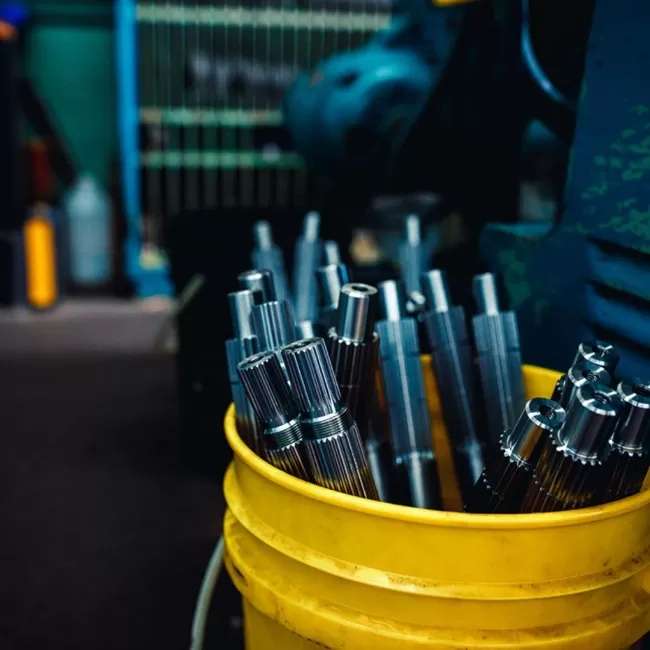
Spline shafts are critical components used in various industrial machinery to transmit torque while allowing for axial movement. Without gears and splines, it is practically not possible for industrial and manufacturing units to survive. A splined shaft comes in different shapes and sizes depending on the application, but they all have one thing in common – precision manufacturing. In this blog post, we will explore the different machining processes involved in spline shaft manufacturing.
Spline shafts are vital components used in various machines, especially those that require torque transmission and axial movement. These shafts have grooves or teeth machined onto them to fit into matching slots on other machine parts such as gears or couplings. One of the main benefits of spline shafts over gears is that the shafts provide maximum contact due to a larger surface area, thus ensuring smoother transmission. The splines provide a secure connection between the two parts while allowing for relative motion.
Spline shaft manufacturers rely on a wide range of machining processes. We discuss them below.
Splined shafts play a crucial role in various industries and applications. As we have seen in this blog, there are different machining processes involved in manufacturing splined shafts such as broaching, hobbing, and milling. True Gear & Spline Ltd. is a leading manufacturer of gears and splines. We use the latest CNC machining technology to offer gears and splines with tight tolerances to all our clients. We are one of the leading gear manufacturers in Ontario with clients across Canada. Contact us today to learn about everything we can do for you.
Request a quote today and discover why industries across North America trust us for their gear manufacturing needs.